Camp kitchen · RESEARCH-BASED BUYING GUIDE
Choose a Camp Kitchen Tool Roll From Your Actual Menu
A kitchen tool roll is an organizer, not a reason to pack every utensil from home. Its most useful feature is showing you what belongs in the kit and what is missing. Start with the menu and select a layout for those tools before comparing the size of bundled sets.
As an Amazon Associate I earn from qualifying purchases. We have not hands-on tested the products discussed in this guide.
Pack for meals you actually make
Lay out the serving and preparation tools needed for one typical trip. Separate duplicates from tools with genuinely different jobs. If a spoon handles the only stirring task, you may not need a separate whisk, ladle, and spatula. Keep sharp tools in their intended protective sleeves, and do not let a new roll's empty pockets pressure you into filling them.
Measure handles as well as working ends
Record the length and widest part of each utensil. Compare these with pocket depth and closure position. A long handle can prevent the roll from closing even when the working end fits easily. Draw the packed arrangement on paper, leaving room for the fabric between pockets. A zippered case may suit bulky tools better than a tightly rolled design.
Check clean and used-item separation
Look for an organizer you can open fully to inspect and clean. Decide where temporarily used tools will go until they are washed and dried, rather than returning them immediately to clean pockets. GSI's Destination Kitchen Set includes a carry case and illustrates the variety of tools sold together; use its contents as a comparison list, not a claim that every camper needs the entire bundle.
Reuse a suitable case first
A washable kitchen pouch or existing utensil case can perform the job if tools fit and protected edges cannot damage it. Try packing and unpacking it during a meal at home. Buy a dedicated roll when individual access or a clear inventory matters more than minimum volume. Label only the tools you keep, and revisit the kit after a trip to remove items that remained unused.
A few-tool meal example
Imagine your normal camp dinner needs a serving spoon, a spatula, and a small preparation tool already kept in its protective sleeve. A twenty-piece kitchen bundle may add several objects you will wash and repack without using. Lay out those three real tools and compare a simple washable case with a roll. A roll may make the inventory clearer, while a case may close more easily around a bulky handle. Keep the protective sleeve as intended rather than treating fabric pockets as blade protection. After a trial meal at home, choose the arrangement that lets each tool be removed and returned without unpacking the rest. There is no need to fill the organizer's spare pockets.
Compare the practical approaches
| Organizer | Good reason to consider it | Main compromise to inspect |
|---|---|---|
| Existing washable pouch | You use only a few tools and can identify them without emptying a crowded case. | Bulky working ends can overlap, and a closed pouch may hide a missing item. Check opening width and protective sleeves. |
| Individual-pocket roll | You value a quick inventory and independent access to slim tools. | Pocket depth and roll closure must fit the longest handles; adding unused tools merely to fill pockets defeats the organization. |
| Wide-opening zip case | Your tools have broad or irregular shapes that do not roll neatly. | Compare the fully packed depth, cleaning access, and any interior divider that reduces usable opening space. |
| Separate small task cases | Food preparation and serving happen in different locations or at different times. | Two cases add inventory steps. Keep each group small enough that you can explain its role without creating a miscellaneous overflow pouch. |
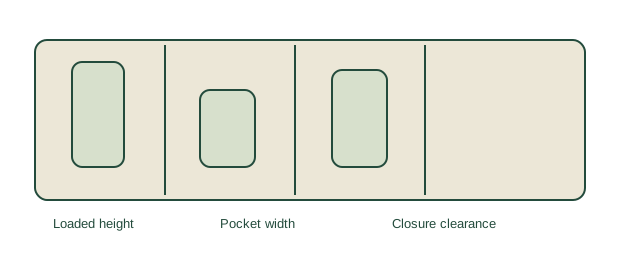
Illustrative packing dimensions: handle length changes the choice
These are invented dimensions for an organizer exercise, not specifications for any tool or case. Suppose your selected tools include a 29 cm spoon, a 27 cm spatula, and a protected preparation tool whose sleeve is 23 cm long. A roll with a stated 25 cm closed internal length cannot be assumed to close around the spoon simply because its pocket holds the spoon’s working end.
The spoon extends 4 cm beyond that hypothetical usable length. That difference is a prompt to check the opening, flap, and intended closure, not permission to force the tool diagonally or leave its handle exposed. A case with an appropriate wider opening may be simpler. Ask for usable interior dimensions when only external measurements are published, and retain every sharp tool’s intended sleeve regardless of the organizer format.
Now connect the tools to a two-meal menu. If neither meal needs a whisk or ladle, an included pocket does not create a need for one. Lay the selected protected tools on paper and draw the organizer around them, allowing room for fabric and the closure. The smallest workable arrangement can be a suitable pouch you already own, provided it supports the intended contents and cleaning routine.
Create a menu-to-tool packing worksheet
- Write the planned meals and list the preparation or serving actions for each. Group repeated actions so one suitable tool can appear once instead of being counted separately for every recipe.
- Lay out the selected tools with all intended sleeves or covers installed. Measure full length and widest working end, then identify any unusual handle that changes the packed outline.
- Compare actual usable organizer dimensions, opening width, and closure area. Label missing measurements as unknown; do not infer interior clearance from an outside product photograph.
- Assign a temporary place for used tools before washing and drying. Keep that stage separate from the clean organizer, and follow the equipment and campsite instructions for cleaning and wastewater.
- Perform a meal-sized packing rehearsal at home. Check whether one tool can be removed without exposing protected edges or unloading everything else. Remove unused tools after the next trip before considering a larger case.
Is it worth adding to your kit?
Consider it if
Loose tools repeatedly disappear and a cleanable pocket layout improves access and inventory.
Skip it if
A suitable existing pouch organizes the few tools you actually use.
COMPARE FEATURES, THEN CHECK THE LISTING
Explore the options
These are category search results, not a claim that every result fits this guide. Match dimensions, contents, care instructions, and seller details before choosing.
Search Amazon (paid link) ↗We may earn a commission from qualifying purchases. Prices and availability are shown by the retailer.
Common questions
Should I buy the set with the most pieces?
Only if those pieces suit your meals; unused tools add packing and cleaning work.
Can I put wet tools back into the roll?
Follow care guidance and dry them before storage; keep used items separate until cleaned.
Sources and editorial scope
Primary references support the product-category examples and documented features. Fit exercises, buying decisions, and existing-gear alternatives are Practical Trail editorial guidance. References were reviewed for this guide on October 13, 2026; specifications and product versions can change. This article does not present independent test results.
How our guides are prepared →