Camp comfort · RESEARCH-BASED BUYING GUIDE
Choose Camp Chair Seat Height Before Packed Weight
A lightweight camp chair is appealing until dinner arrives and your plate sits far above your lap. Seat height affects how a chair works with the rest of camp. Start with the activity and a familiar seat at home rather than choosing entirely by the smallest packed weight.
As an Amazon Associate I earn from qualifying purchases. We have not hands-on tested the products discussed in this guide.
Measure a chair you already like
Sit in a household chair that feels comfortable for the activity you want to do. Measure the floor-to-seat height and note whether your feet rest naturally. A fabric camp seat can sag differently from a rigid dining chair, so treat this as a starting comparison, not a precise fit prediction. Also note the width available between the chair's sides and your preferred sitting posture.
Separate relaxing from eating
A low reclining seat may suit reading, while a more upright chair can make a table easier to reach. Recreate your table height with a household surface and a safely positioned existing chair. Check forearm position and whether the table edge crowds your knees. If you plan to eat on a picnic bench anyway, you may not need the lounge chair to perform both jobs.
Compare the full carry package
Look at chair dimensions when open and packed, including the case. Measure the space in your vehicle where it will actually live. Consider setup parts and whether you want a folding frame or separate pole-and-fabric assembly. The Helinox furniture range demonstrates that different chair designs serve different layouts; no single feature tells you which is comfortable for your body.
Use a borrowed chair as a fit test
Borrow a similar chair or try one in person before paying for a shape you have not sat in. A familiar folding chair you already own may be suitable for car camping even if it is heavier than a backpacking model. Replace it when it fails a specific reach, space, or comfort test. Check the maker's capacity and use instructions, and avoid treating a seat-height measurement as a medical recommendation.
A table-and-chair comparison example
Consider a camper choosing between a low compact chair and an upright folding seat for a site with a standard picnic table. The low chair may be appealing for relaxing, while all meals will happen on the existing bench. In that situation, the chair does not need to match the table at all. For a site without a picnic bench, the same camper might value a chair that works with a separate dining table. Draw both daily routines before comparing the products. This prevents a comfortable lounge seat being rejected for a task it never needs to perform, or a compact chair being purchased for dining without checking knee position and reach at the intended surface.
Compare the practical approaches
| Arrangement | Practical advantage | Tradeoff to verify |
|---|---|---|
| Low lounge chair plus existing picnic bench | You can select a relaxed seat without asking it to work at the eating table. | Confirm the campground actually provides a usable bench; otherwise the planned division between lounging and meals may fail. |
| More upright chair paired with a dining table | One seat can support conversation and ordinary table use when the specific fit works. | Check actual seated position, underside braces, knee clearance, and table reach together rather than buying from advertised height alone. |
| Familiar folding chair already owned | You can assess comfort and packing without paying for an unfamiliar frame. | Measure the full case or folded outline in the vehicle, and verify that the chair is intended and suitable for the use. |
| Compact chair plus a matching side surface | A small reachable surface can serve a drink or book while leaving the main table elsewhere. | Compare the combined packed set and ground footprint. Saving chair weight may be less useful if a second surface becomes necessary. |
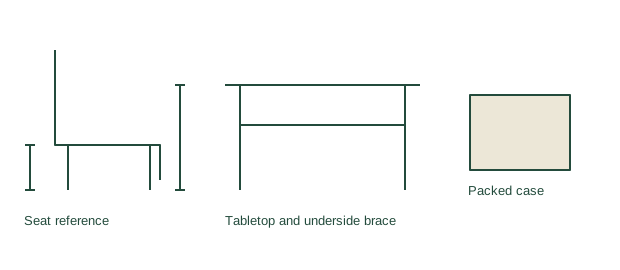
Illustrative height comparison: use a reference, not a fit formula
These invented dimensions illustrate a comparison exercise and are not ergonomic recommendations. Suppose a familiar chair has a seat 44 cm above the floor and your eating surface is 72 cm high. The simple vertical difference is 28 cm. A candidate seat listed at 32 cm would create a 40 cm difference to that same tabletop, before allowing for fabric sag or the way you sit.
The additional 12 cm of separation suggests a question to investigate: will reaching the table feel awkward? It does not prove the candidate is unsuitable, establish a desirable target difference, or account for body proportions. Sit in a supported setup or try the actual candidate whenever possible. Never create a makeshift raised seat by balancing furniture on loose objects for this exercise.
If meals happen on a supplied picnic bench, that table comparison may be irrelevant to the lounge chair. If one chair must handle both eating and relaxing, assess both positions separately. Record your own comfortable reference and any observed inconvenience, then compare those notes with the packed dimensions. This keeps a lightweight-chair decision connected to the whole camp routine.
A chair-and-surface comparison worksheet
- Name the principal activity: eating, reading, conversation, or relaxing. Add a second activity only if the same chair genuinely needs to perform it during your usual trips.
- Record a familiar chair’s seat height and useful width, then note how your feet, arms, and back feel in that actual position. Treat these observations as personal references, not medical guidance.
- Measure the intended tabletop and the clear space beneath it. Mark any support brace that could occupy the knee area; overall table height alone does not describe that clearance.
- For each candidate, list its complete open and packed dimensions, case included. Separate published measurements from your own observations so a catalog seat height is not mistaken for an occupied-seat measurement.
- Try sitting, reaching, standing, and moving past the neighboring chair in a suitable setup. Keep a short “works / uncertain / awkward” note for each task, and buy only when the improvement is specific.
Is it worth adding to your kit?
Consider it if
Your current chair makes ordinary camp activities awkward and a different height solves the problem.
Skip it if
An existing folding chair fits your vehicle and works comfortably with your camp routine.
COMPARE FEATURES, THEN CHECK THE LISTING
Explore the options
These are category search results, not a claim that every result fits this guide. Match dimensions, contents, care instructions, and seller details before choosing.
Search Amazon (paid link) ↗We may earn a commission from qualifying purchases. Prices and availability are shown by the retailer.
Common questions
Is a higher chair always easier to use?
No. Body size, seat shape, and table height all affect fit; try the intended position if possible.
Can a small table fix a low chair?
Sometimes. Compare the combined chair-and-table layout before replacing either item.
Sources and editorial scope
- Helinox official furniture and accessories ↗
- NEMO Moonlander dual-height camp table ↗
- Helinox Chair One (re) open and packed specifications ↗
Primary references support the product-category examples and documented features. Fit exercises, buying decisions, and existing-gear alternatives are Practical Trail editorial guidance. References were reviewed for this guide on October 13, 2026; specifications and product versions can change. This article does not present independent test results.
How our guides are prepared →